Rooing Materials Comparison Guide
Last Updated: January 12, 2026
Choosing a roofing material is one of the most influential decisions in any roof repair or replacement project. Roofing materials differ not only in appearance, but also in how they perform across climates, roof designs, and building types. Understanding the general characteristics of each material helps homeowners and property owners evaluate options without relying on assumptions or one-size-fits-all recommendations.
No roofing material is universally “best.” Suitability depends on the structure, environment, budget range, and long-term plans for the property.
How Roofing Materials Are Commonly Compared
Roofing materials are often compared across several broad criteria rather than a single metric. These criteria typically include durability expectations, installation complexity, cost range, maintenance considerations, and compatibility with roof design.
Comparisons are most useful when materials are evaluated within the context of the specific building rather than in isolation.
Asphalt Shingles
Asphalt shingles are among the most commonly used roofing materials for residential properties. They are manufactured in multiple styles and grades and are compatible with a wide range of roof designs.
Shingles are often selected for their availability, visual flexibility, and moderate cost range. Performance characteristics vary by shingle type, thickness, and manufacturer specifications.
Asphalt shingles are typically used on pitched roofs and are less common on low-slope or flat designs.
Metal Roofing
Metal roofing systems include standing seam panels, exposed fastener panels, and metal shingles. These systems are used in both residential and commercial applications and are valued for their longevity characteristics and material consistency.
Metal roofing often involves higher upfront cost ranges than asphalt shingles, but cost comparison depends on system type, roof complexity, and installation conditions rather than material alone.
Metal systems may be suitable for a wide range of climates when properly designed and installed.
Tile Roofing
Tile roofing systems are commonly manufactured from clay or concrete and are often associated with specific architectural styles. Tile materials are heavier than many other roofing options and require structural compatibility.
Tile roofs are typically used in regions where their appearance and performance characteristics align with local building practices. Installation complexity and material weight influence both cost and design requirements.
Slate Roofing
Slate roofing uses natural stone materials cut into individual tiles. These systems are known for distinctive appearance and long service life expectations when conditions are appropriate.
Slate roofing generally falls within higher cost ranges due to material sourcing, weight considerations, and installation requirements. Structural evaluation is often necessary when considering slate materials.
Wood Shakes and Shingles
Wood roofing materials include shakes and shingles, typically manufactured from cedar or similar species. These materials are chosen primarily for aesthetic reasons and regional compatibility.
Wood roofing requires specific environmental and maintenance considerations and is subject to local regulations and restrictions in some areas.
Low-Slope and Flat Roofing Materials
Low-slope and flat roofs commonly use membrane-based systems rather than shingles or tiles. These materials may include single-ply membranes or built-up systems designed for water management rather than shedding.
These systems are frequently used on commercial buildings but may also appear on residential additions or modern designs.
Residential and Commercial Material Differences
Residential roofing materials often emphasize appearance, neighborhood compatibility, and pitched roof performance. Commercial roofing materials typically prioritize drainage control, surface durability, and compatibility with rooftop equipment.
Some materials overlap both categories, but system design and detailing differ significantly between residential and commercial applications.
Cost Range Considerations Across Materials
Roofing materials vary widely in cost range depending on material type, system design, and installation complexity. Asphalt shingles generally fall within lower to mid-range pricing, while metal, tile, and slate systems often occupy broader or higher cost ranges.
Cost comparisons should consider both installation and long-term maintenance expectations rather than material price alone.
Climate and Environmental Factors
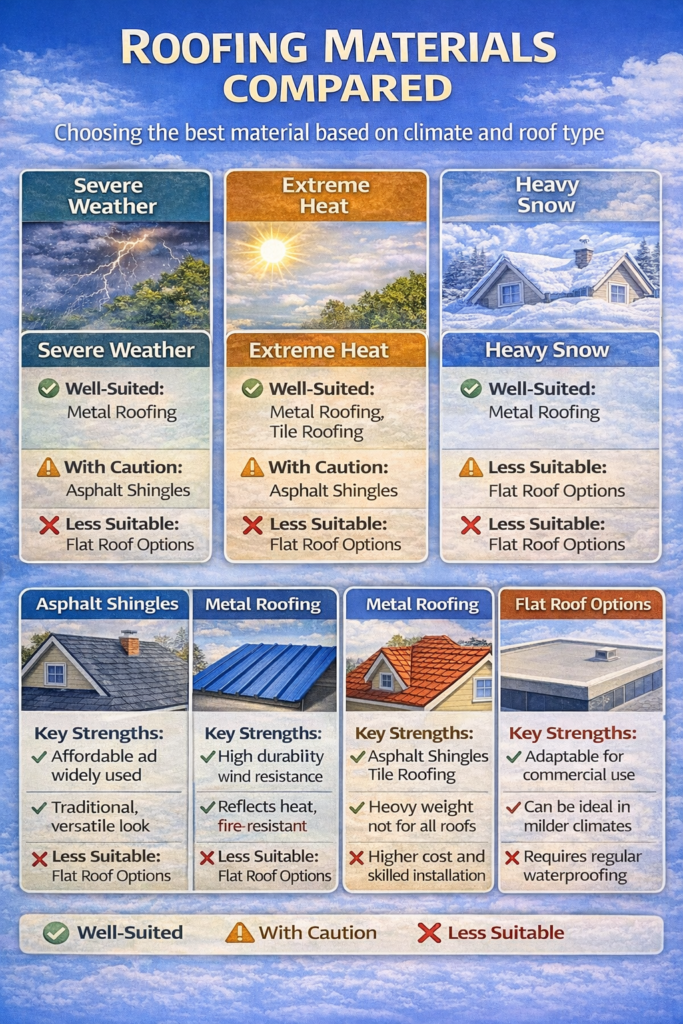
Climate influences how roofing materials perform over time. Temperature fluctuations, moisture exposure, wind conditions, and sun intensity all interact differently with various materials.
Material selection is often guided by regional building practices and historical performance in similar environments.
Maintenance and Longevity Expectations
Different roofing materials have different maintenance profiles. Some systems require periodic inspections and component replacement, while others rely primarily on long-term material performance.
Longevity expectations vary based on material quality, installation conditions, and environmental exposure.
Insurance and Policy Considerations
Insurance treatment of roofing materials varies by carrier, policy type, and state regulations. Coverage limits, depreciation methods, and eligibility criteria may differ depending on material choice.
This information is provided for general educational purposes only and does not constitute insurance or legal advice. Property owners should consult their insurance agent or legal advisor regarding how roofing materials may affect coverage or claims.
Evaluating the Right Material for a Property
Selecting a roofing material involves balancing performance expectations, cost range, appearance, and long-term plans for the building. Comparing materials within the context of the specific structure leads to more informed decisions than ranking materials broadly.
Final Notes
This content is provided for informational purposes only. Roofing material performance, cost ranges, and suitability vary by property type, region, and installation conditions. Always utilize insured and bonded roofing professionals who hold the required state licensing when evaluating or installing roofing systems.