Complete Guide to Metal Roofing
Last Updated: January 12, 2026
Metal roofing has become an increasingly common option for both residential and commercial buildings. Once associated primarily with agricultural or industrial structures, modern metal roofing systems are now widely used on homes, multi-family buildings, and commercial properties. Understanding how metal roofing works, the different system types, and the factors that influence cost and performance helps property owners evaluate whether it aligns with their needs.
Metal roofing is not a single product category. It includes multiple materials, profiles, and installation methods, each with distinct characteristics.
What Defines a Metal Roofing System
A metal roof is a system made up of panels or shingles manufactured from metal alloys and installed over a structural deck or substrate. These systems rely on interlocking panels, fasteners, and flashing components to manage water shedding and environmental exposure.
Unlike surface-only coverings, metal roofing performance depends heavily on panel design, attachment method, underlayment selection, and detailing at transitions.
Common Types of Metal Roofing
Metal roofing systems are generally categorized by panel profile and attachment method rather than material alone.
Standing Seam Metal Roofing
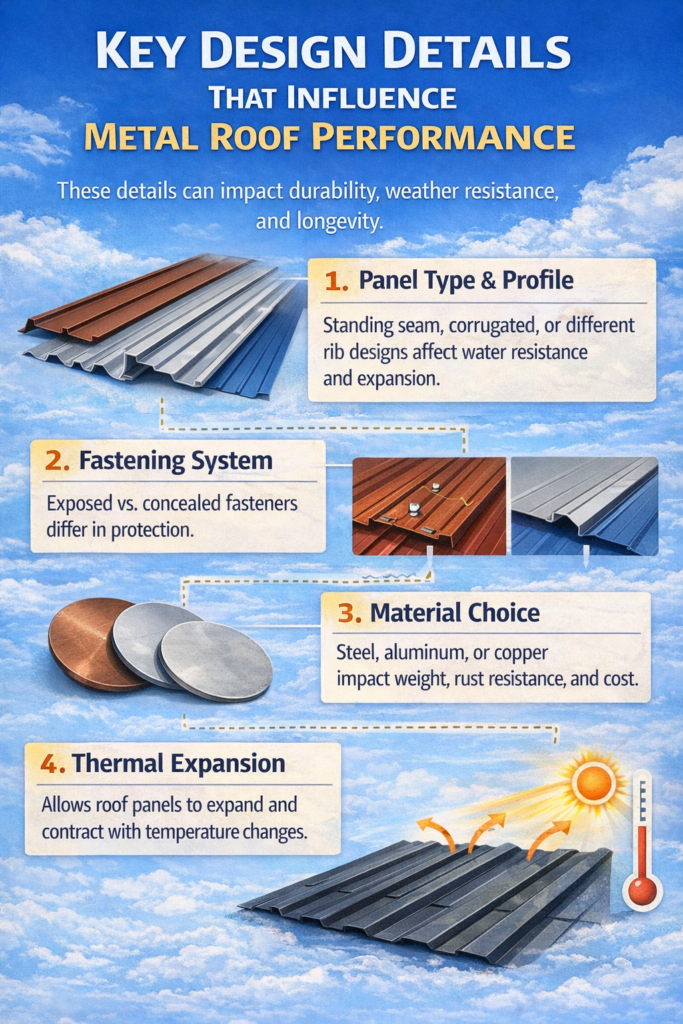
Standing seam systems use vertical panels with raised seams that conceal fasteners beneath the panel joints. These systems are commonly used in both residential and commercial applications and are often selected for their clean appearance and reduced fastener exposure.
Panel width, seam height, and locking method vary between manufacturers and influence both cost and installation complexity.
Exposed Fastener Panels
Exposed fastener systems secure panels directly to the roof deck using visible fasteners with sealing washers. These panels are frequently used on agricultural buildings, workshops, and some residential projects.
Fastener placement, washer integrity, and panel overlap are critical to long-term performance in these systems.
Metal Shingles and Tiles
Metal shingles are designed to mimic traditional roofing materials such as asphalt shingles, wood shakes, or tile. These systems often use modular panels that interlock and are installed in courses.
Metal shingles are typically chosen for their appearance and compatibility with architectural styles while offering different durability characteristics than traditional materials.
Metal Roofing Materials
Several metals are commonly used in roofing applications, each with different properties.
Steel is widely used due to its strength and availability, often coated to enhance corrosion resistance. Aluminum is lighter and naturally corrosion resistant, making it suitable for coastal or humid environments. Copper and zinc are specialty materials known for longevity and distinctive appearance but are used less frequently due to cost and design considerations.
Material thickness, coatings, and finish systems all influence performance and pricing.
Residential and Commercial Applications
Metal roofing is used across a wide range of building types. Residential applications often emphasize appearance, integration with architectural elements, and noise considerations. Commercial installations may prioritize drainage performance, panel length, and compatibility with rooftop equipment.
While the core materials may be similar, system design and detailing often differ significantly between residential and commercial projects.
Cost Factors for Metal Roofing
Metal roofing costs vary widely based on system type, material selection, roof design, and regional labor conditions. Standing seam systems typically fall within a higher cost range than exposed fastener panels due to material and labor requirements.
Pricing may be influenced by panel length, seam complexity, underlayment systems, trim packages, and installation conditions. Because of these variables, metal roofing is best evaluated using broad ranges rather than fixed numbers.
Durability and Longevity Considerations
Metal roofing systems are often selected for their long service life when properly designed and installed. Longevity depends on material choice, coating systems, environmental exposure, and maintenance practices.
Performance expectations vary between systems, and no single metal roof type performs identically across all environments.
Noise, Insulation, and Comfort Factors
Modern metal roofing systems are typically installed over solid decking with underlayment, which influences sound transmission and thermal performance. Perceived noise levels depend on roof assembly design rather than panel material alone.
Insulation and ventilation choices play a role in overall comfort and energy behavior.
Maintenance and Inspection Considerations
Metal roofs generally require periodic inspection rather than frequent repair. Inspection focus areas may include fasteners, seams, sealants, flashing, and surface coatings.
Maintenance needs vary by system type and environmental conditions.
Installation Complexity and Design Details
Metal roofing installation requires careful attention to detailing at edges, penetrations, and transitions. Panel alignment, thermal movement accommodation, and flashing integration are critical to system performance.
Insurance and Policy Considerations
Insurance treatment of metal roofing varies by carrier, policy terms, and state regulations. Coverage, depreciation, and claim handling may differ from other roofing materials. This information is provided for general educational purposes only and is not insurance or legal advice. Property owners should consult their insurance agent or legal advisor regarding policy-specific considerations.
Evaluating Whether Metal Roofing Is the Right Choice
Metal roofing is one of many viable roofing options. Evaluating suitability involves balancing cost, appearance, performance expectations, and long-term planning rather than relying on generalized comparisons.
Final Notes
This content is provided for informational purposes only. Metal roofing systems, costs, and performance characteristics vary by material, design, and installation conditions. Always utilize insured and bonded roofing professionals who hold the required state licensing when evaluating or installing metal roofing systems.