
Roofing Costs: Complete Pricing Guide
Last Updated: January 10, 2026
Roofing costs can vary widely, even between homes that appear similar at first glance. Materials, roof design, labor conditions, and the scope of work all play a role in determining overall price. Understanding how these variables interact helps homeowners evaluate estimates, plan budgets, and avoid surprises during a roofing project.
Roofing prices are best viewed as ranges rather than fixed numbers. No two roofs are identical, and pricing reflects a combination of structural, environmental, and market-driven factors.
How Roofing Costs Are Commonly Measured
Roofing projects are typically priced using standardized units that allow contractors to estimate materials and labor consistently. Residential roofing is often measured by surface area, while commercial projects may incorporate additional calculations related to drainage, membrane systems, or structural requirements.
Beyond surface measurements, pricing also accounts for complexity. Roof pitch, height, penetrations, and layout can all increase labor demands even when total square footage is similar.
Major Factors That Influence Roofing Costs
Several core elements consistently shape roofing prices across regions and property types.
Roofing Material Selection
Material choice is one of the most visible cost drivers. Asphalt shingles, metal panels, tile, slate, and membrane systems each have distinct manufacturing costs, installation methods, and lifespan expectations.
For example, asphalt shingles are commonly selected for their balance of affordability and availability, while metal roofing systems often involve higher upfront costs paired with different durability and maintenance considerations. Material thickness, coatings, profiles, and warranties can further influence pricing within each category.
Roof Size and Design Complexity
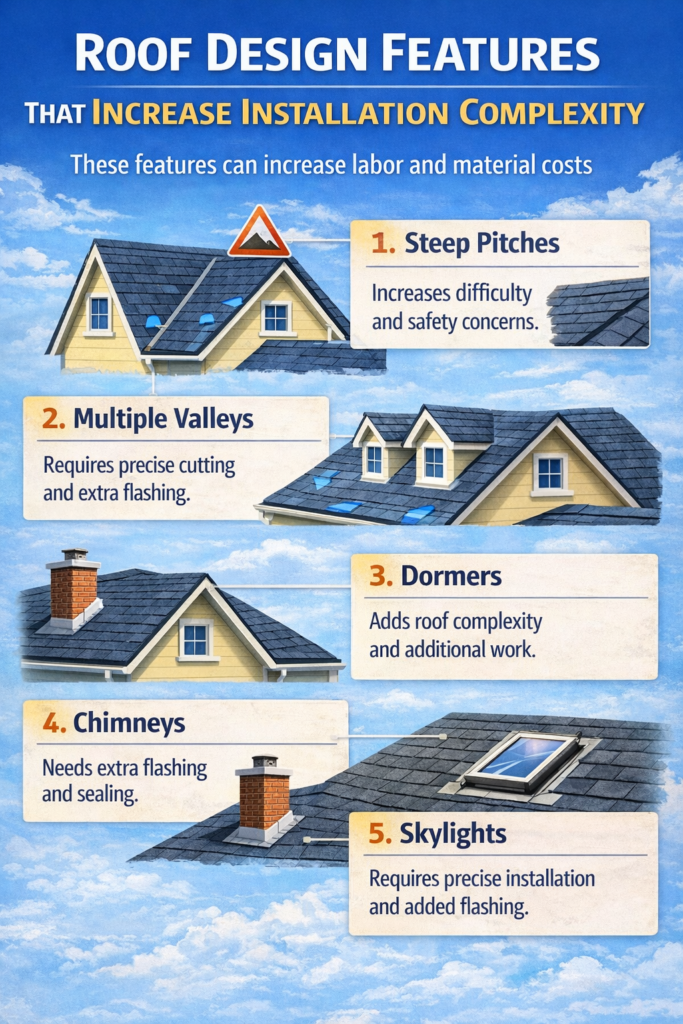
Larger roofs require more materials and labor, but design complexity can be just as impactful as size. Steep slopes, multiple valleys, dormers, skylights, chimneys, and intersecting rooflines increase installation time and waste factors.
Tear-Off and Preparation Requirements
Removing existing roofing materials adds labor, disposal fees, and time to a project. Some roofs require multiple layers to be removed before new materials can be installed, while others may need deck repairs if underlying components are damaged or deteriorated.
Preparation work often extends beyond the visible surface and can influence both cost and scheduling.
Labor and Regional Market Conditions
Labor costs vary by region based on demand, availability of skilled crews, and local operating expenses. Seasonal demand, weather windows, and regional building practices all influence pricing.
Urban areas and regions with high construction activity may experience higher labor costs than rural or lower-demand markets.
Permits, Access, and Logistics
Some roofing projects require permits, inspections, or coordination with local authorities. Accessibility also affects labor efficiency. Limited staging areas, landscaping constraints, or multi-story access requirements can increase setup time and labor needs.
Repair Costs vs Replacement Costs
Roof repairs and full replacements serve different purposes and carry different cost structures. Repairs are typically localized and address specific issues, while replacements involve removing and reinstalling the entire roofing system.
Repair costs depend heavily on location, material availability, and the extent of damage. In contrast, replacement pricing reflects broader factors such as total area, system type, and installation complexity.
In some cases, repeated repairs over time can approach the cost of replacement, which is why homeowners often evaluate both options when issues persist.
Residential and Commercial Cost Considerations
Residential and commercial roofing projects differ in both materials and installation methods. Commercial roofs may involve flat or low-slope systems, drainage planning, and specialized membranes, while residential roofs more commonly use pitched designs and shingle-based systems.
Although commercial projects may cover larger surface areas, their cost structure is shaped by system type, access requirements, and operational considerations rather than size alone.
Understanding Cost Ranges Without Fixed Numbers
Roofing costs are best discussed in ranges because pricing depends on variables that cannot be standardized across properties. For example, asphalt shingle installation may fall within a broad per-square-foot range depending on material grade, roof pitch, tear-off needs, and regional labor costs. Metal roofing systems may span a wider range based on panel type, fastening method, and substrate preparation.
Ranges allow homeowners to compare estimates logically while recognizing that final pricing reflects site-specific conditions.
Additional Cost Variables to Consider
Several secondary factors can influence final project cost:
These items may not always be visible in initial estimates but can affect long-term performance and maintenance planning.
Evaluating Roofing Estimates
When reviewing estimates, homeowners often compare more than just total price. Scope clarity, material specifications, timeline expectations, and exclusions all matter when assessing value.
Clear estimates outline what is included, what is excluded, and how unforeseen conditions are handled if discovered during work.
Insurance and Cost Considerations
Insurance coverage for roofing work varies by carrier, policy type, and state regulations. Deductibles, depreciation methods, and coverage limits can significantly affect out-of-pocket costs. This information is provided for general educational purposes only and is not insurance or legal advice. Homeowners should consult their insurance agent or legal advisor to understand how their specific policy applies.
Planning for Long-Term Value
Roofing costs are not limited to installation alone. Longevity, maintenance needs, and compatibility with the structure all influence long-term value. Evaluating cost alongside expected service life and maintenance planning can help homeowners make informed decisions.
Final Notes
This content is provided for informational purposes only. Roofing costs vary widely based on materials, labor markets, property conditions, and regional factors. Always utilize insured and bonded roofing professionals who hold the required state licensing, and consult appropriate professionals regarding insurance, financial, or legal considerations.